Illinois, statewide, 3,410 deer have tested positive for CWD TSE Prion To Date
Illinois, statewide, 3,410 deer have tested positive for CWD TSE Prion To Date
IDNR to pause chronic wasting disease public informational meetings across northern and central Illinois for fall 2026
Release Date: 10/16/2026
IDNR to pause chronic wasting disease public informational meetings across northern and central Illinois for fall 2026
FOR IMMEDIATE RELEASE Friday, Oct. 16, 2026
Media contact: dnr.pio@illinois.gov
SPRINGFIELD – The Illinois Department of Natural Resources (IDNR) will temporarily pause public meetings throughout northern and west-central Illinois this fall to prepare materials outlining changes to the state’s chronic wasting disease (CWD) program goals, objectives and future disease surveillance strategies.
The department is refining its CWD management strategy following its decision in spring 2026 to discontinue targeted deer removal, also known as sharpshooting, statewide.
IDNR staff will resume public meetings in fall 2027 to discuss the future direction of the CWD program and answer questions about the disease, as CWD remains an important issue and will continue to be a priority in future deer management discussions in Illinois. Landowners, hunters and other concerned citizens are encouraged to attend.
Beginning in fall 2026, IDNR will offer voluntary mail-in sampling kits for hunters who want to collect lymph nodes from adult deer for CWD testing. Kits will be available on a first-come, first-served basis while supplies last. Hunters may request up to two kits at a time and can request additional kits as needed if they harvest more deer. Hunters can request mail-in sampling kits online or by contacting their local district wildlife biologist.
CWD is a fatal disease of the central nervous system that affects deer and elk. The disease was first detected in Illinois in 2002 in a suspect adult female deer from northwestern Boone County. Since then, 199,136 wild deer have been sampled statewide, and 3,410 deer have tested positive for CWD. The disease has been detected in 28 counties across northern and central Illinois.
From July 1, 2025, through June 30, 2026, IDNR identified 662 CWD-positive deer in 28 Illinois counties: Adams, Boone, Bureau, Carroll, Cook, DeKalb, DuPage, Effingham, Ford, Grundy, Jo Daviess, Kane, Kankakee, Kendall, Lake, LaSalle, Lee, Livingston, Marshall, McHenry, Ogle, Peoria, Putnam, Scott, Stark, Stephenson, Will and Winnebago. Annual CWD reports are available online.
For more information about the meetings or CWD, contact Chris Jacques, IDNR wildlife disease program manager, at chris.jacques@illinois.gov.
https://www.illinois.gov/news/release.html?releaseid=33040
The year is the IDNR fiscal year, which begins July 1st of the current calendar year and ends June 30th of the following year. The cases represent the number of CWD cases within the fiscal year dates. Data may take up to a minute to load. Harvest data is only available up to the 2020 Fiscal Year.
2026
Total Statewide CWD-Positive Cases 662
2025
Total Statewide CWD-Positive Cases 539
dnr2.illinois.gov
so, what is the latest science for cooking the CWD TSE Prion out of cervid meat?
***> you can’t cook the CWD TSE Prion out of meat, and in fact, cooking actually enhances the CWD TSE Prion in meat…terry
Volume 31, Number 2—February 2025
Dispatch
Detection of Chronic Wasting Disease Prions in Raw, Processed, and Cooked Elk Meat, Texas, USA
Snip…
Of note, our data show that exposure to high temperatures used to cook the meat increased the availability of prions for in vitro amplification. Considering the potential implications in food safety and public health, we believe that the findings described in this study warrant further research. Our results suggest that although the elk meat used in this study resisted different manipulations involved in subsequent consumption by humans, their zoonotic potential was limited. Nevertheless, even though no cases of CWD transmission to human have been reported, the potential for human infection is still unclear and continued monitoring for zoonotic potential is warranted.
https://wwwnc.cdc.gov/eid/article/31/2/24-0906_article
Detection of chronic wasting disease prions in processed meats
Results: Our results show positive prion detection in all the samples analyzed using deer and elk substrates. Surprisingly, cooked meats displayed increased seeding activities. This data suggests that CWD-prions are available to people even after meats are processed and cooked.
Conclusions: These results suggest CWD prions are accessible to humans through meats, even after processing and cooking. Considering the fact that these samples were collected from already processed specimens, the availability of CWD prions to humans is probably underestimated.
"Our results show positive prion detection in all the samples analyzed using deer and elk substrates. Surprisingly, cooked meats displayed increased seeding activities."
Meeting-book-final-version prion 2023 Prion 2023 Congress Organizing Committee and the NeuroPrion Association, we invite you to join us for the International Conference Prion2023 from 16-20 October 2023 in Faro, Portugal.
https://prion2023.org/wp-content/uploads/2023/10/Meeting-book-final-version2.pdf
https://web.archive.org/web/20250828201533/https://prion2023.org/wp-content/uploads/2023/10/Meeting-book-final-version2.pdf
https://www.researchgate.net/profile/Syed-Zahid-Shah/publication/378314391_Meeting-book-final-version_prion_2023/links/65d44dad28b7720cecdca95f/Meeting-book-final-version-prion-2023.pdf
DETECTION OF CHRONIC WASTING DISEASE PRIONS IN PROCESSED MEATS.
In this study, we analyzed different processed meats derived from a pre-clinical, CWD-positive free-ranging elk. Products tested included filets, sausages, boneless steaks, burgers, ham steaks, seasoned chili meats, and spiced meats. CWD-prion presence in these products were assessed by PMCA using deer and elk substrates. Our results show positive prion detection in all products. To confirm the resilience of CWD-prions to traditional cooking methods, we grilled and boiled the meat products and evaluated them for any remnant PMCA seeding activity. Results confirmed the presence of CWD-prions in these meat products suggesting that infectious particles may still be available to people even after cooking. Our results strongly suggest ongoing human exposure to CWD-prions and raise significant concerns of zoonotic transmission through ingestion of CWD contaminated meat products.
Products tested included filets, sausages, boneless steaks, burgers, ham steaks, seasoned chili meats, and spiced meats.
CWD-prion presence in these products were assessed by PMCA using deer and elk substrates.
Our results show positive prion detection in all products.
Results confirmed the presence of CWD-prions in these meat products suggesting that infectious particles may still be available to people even after cooking.
Our results strongly suggest ongoing human exposure to CWD-prions and raise significant concerns of zoonotic transmission through ingestion of CWD contaminated meat products.
https://intcwdsympo.files.wordpress.com/2023/06/final-agenda-with-abstracts.pdf?force_download=true
Transmission of prion infectivity from CWD-infected macaque tissues to rodent models demonstrates the zoonotic potential of chronic wasting disease.
Further passage to cervidized mice revealed transmission with a 100% attack rate.
Our findings demonstrate that macaques, considered the best model for the zoonotic potential of prions, were infected upon CWD challenge, including the oral one.
The disease manifested as atypical in macaques and initial transgenic mouse transmissions, but with infectivity present at all times, as unveiled in the bank vole model with an unusual tissue tropism.
Epidemiologic surveillance of prion disease among cervid hunters and people likely to have consumed venison contaminated with chronic wasting disease
=====
https://intcwdsympo.files.wordpress.com/2023/06/final-agenda-with-abstracts.pdf?force_download=true
Prions in Muscles of Cervids with Chronic Wasting Disease, Norway
Volume 31, Number 2—February 2025
Research
Prions in Muscles of Cervids with Chronic Wasting Disease, Norway
Snip…
In summary, the results of our study indicate that prions are widely distributed in peripheral and edible tissues of cervids in Norway, including muscles. This finding highlights the risk of human exposure to small amounts of prions through handling and consuming infected cervids.
Appendix
https://wwwnc.cdc.gov/eid/article/31/2/24-0903-app1.pdf
https://wwwnc.cdc.gov/eid/article/31/2/24-0903_article
CDC CWD TSE Prion Update 2025
KEY POINTS
Chronic wasting disease affects deer, elk and similar animals in the United States and a few other countries.
The disease hasn't been shown to infect people.
However, it might be a risk to people if they have contact with or eat meat from animals infected with CWD.
https://web.archive.org/web/20241120220110/https://www.cdc.gov/chronic-wasting/about/index.html
Transmission of prion infectivity from CWD-infected macaque tissues to rodent models demonstrates the zoonotic potential of chronic wasting disease.
Samia Hannaoui1,2, Ginny Cheng1,2, Wiebke Wemheuer3, Walter Schulz-Schaeffer3, Sabine Gilch1,2, Hermann Schatzl1,2 1University of Calgary, Calgary, Canada. 2Calgary Prion Research Unit, Calgary, Canada. 3Institute of Neuropathology, Medical Faculty, Saarland University, Homburg/Saar, Germany
***> Further passage to cervidized mice revealed transmission with a 100% attack rate.
***> Our findings demonstrate that macaques, considered the best model for the zoonotic potential of prions, were infected upon CWD challenge, including the oral one.
****> The disease manifested as atypical in macaques and initial transgenic mouse transmissions, but with infectivity present at all times, as unveiled in the bank vole model with an unusual tissue tropism.
***> Epidemiologic surveillance of prion disease among cervid hunters and people likely to have consumed venison contaminated with chronic wasting disease
=====
Transmission of Cervid Prions to Humanized Mice Demonstrates the Zoonotic Potential of CWD
Samia Hannaouia, Irina Zemlyankinaa, Sheng Chun Changa, Maria Immaculata Arifina, Vincent Béringueb, Debbie McKenziec, Hermann M. Schatzla, and Sabine Gilcha
Results: Here, we provide the strongest evidence supporting the zoonotic potential of CWD prions, and their possible phenotype in humans. Inoculation of mice expressing human PrPCwith deer CWD isolates (strains Wisc-1 and 116AG) resulted in atypical clinical manifestations in > 75% of the mice, with myoclonus as leading clinical sign. Most of tg650brain homogenates were positive for seeding activity in RT-QuIC. Clinical disease and presentation was transmissible to tg650 mice and bank voles. Intriguingly, protease-resistant PrP in the brain of tg650 mice resembled that found in a familial human prion disease and was transmissible upon passage. Abnormal PrP aggregates upon infection with Wisc-1 were detectable in thalamus, hypothalamus, and midbrain/pons regions.
Unprecedented in human prion disease, feces of CWD-inoculated tg650 mice harbored prion seeding activity and infectious prions, as shown by inoculation of bank voles and tg650 with fecal homogenates.
Conclusions: This is the first evidence that CWD can infect humans and cause disease with a distinctive clinical presentation, signature, and tropism, which might be transmissible between humans while current diagnostic assays might fail to detect it. These findings have major implications for public health and CWD-management.
The finding that infectious PrPSc was shed in fecal material of CWD-infected humanized mice and induced clinical disease, different tropism, and typical three banding pattern-PrPres in bank voles that is transmissible upon second passage is highly concerning for public health. The fact that this biochemical signature in bank voles resembles that of the Wisc-1 original deer isolate and is different from that of bvWisc-1, in the migration profile and the glyco-form-ratio, is valid evidence that these results are not a product of contamination in our study. If CWD in humans is found to be contagious and transmissible among humans, as it is in cervids [57], the spread of the disease within humans might become endemic.
Transmission of cervid prions to humanized mice demonstrates the zoonotic potential of CWD
Acta Neuropathol 144, 767–784 (2022). https://doi.org/10.1007/s00401-022-02482-9
Published
22 August 2022
Fortuitous generation of a zoonotic cervid prion strain
Aims: Whether CWD prions can infect humans remains unclear despite the very substantial scale and long history of human exposure of CWD in many states or provinces of USA and Canada. Multiple in vitro conversion experiments and in vivo animal studies indicate that the CWD-to-human transmission barrier is not unbreakable. A major long-term public health concern on CWD zoonosis is the emergence of highly zoonotic CWD strains. We aim to address the question of whether highly zoonotic CWD strains are possible.
Materials and Methods: We inoculated several sCJD brain samples into cervidized transgenic mice (Tg12), which were intended as negative controls for bioassays of brain tissues from sCJD cases who had potentially been exposed to CWD. Some of the Tg12 mice became infected and their brain tissues were further examined by Western blot as well as serial passages in humanized or cervidized mice.
Results: Passage of sCJDMM1 in transgenic mice expressing elk PrP (Tg12) resulted in a “cervidized” CJD strain that we termed CJDElkPrP. We observed 100% transmission of the original CJDElkPrP in transgenic mice expressing human PrP. We passaged CJDElkPrP two more times in the Tg12 mice. We found that such second and third passage CJDElkPrP prions retained 100% transmission rate in the humanized mice, despite that the natural elk CWD isolates and CJDElkPrP share the same elk PrP sequence. In contrast, we and others found zero or poor transmission of natural elk CWD isolates in humanized mice.
Conclusions: Our data indicate that highly zoonotic cervid prion strains are not only possible but also can retain zoonotic potential after serial passages in cervids, suggesting a very significant and serious long-term risk of CWD zoonosis given that the broad and continuing spread of CWD prions will provide fertile grounds for the emergence of zoonotic CWD strains over time.
https://prion2023.org/wp-content/uploads/2023/10/Meeting-book-final-version2.pdf
https://web.archive.org/web/20250828201533/https://prion2023.org/wp-content/uploads/2023/10/Meeting-book-final-version2.pdf
https://www.researchgate.net/profile/Syed-Zahid-Shah/publication/378314391_Meeting-book-final-version_prion_2023/links/65d44dad28b7720cecdca95f/Meeting-book-final-version-prion-2023.pdf
https://www.researchgate.net/profile/Syed-Zahid-Shah/publication/378314391_Meeting-book-final-version_prion_2023/links/65d44dad28b7720cecdca95f/Meeting-book-final-version-prion-2023.pdf
MONDAY, JULY 06, 2026
Cervid CWD TSE PrP Transmission to Humans, has it already happened and being masked as sporadic CJD, What if? July 2026 Review
https://chronic-wasting-disease.blogspot.com/2026/07/cervid-cwd-tse-prp-transmission-to.html
***> hay, straw, plants, vegetables, TSE Prion uptake
Tuesday, June 9, 2026
Hazard identification for the risks to terrestrial animal health from the import of hay and straw, BSE, CWD, Scrapie, TSE, Prion
https://www.gov.uk/government/publications/hazard-identification-for-the-risks-to-terrestrial-animal-health-from-the-import-of-hay-and-straw/hazard-identification-for-the-risks-to-terrestrial-animal-health-from-the-import-of-hay-and-straw
https://defrauktseprp.blogspot.com/2026/06/hazard-identification-for-risks-to.html
USA Report, Scrapie, CWD, BSE, TSE, Cattle, Sheep, Pigs, Cervid, Humans, Zoonotic, 2026
April 2026
https://fdabse589.blogspot.com/2026/04/usa-report-scrapie-cwd-bse-tse-cattle.html
https://www.researchgate.net/publication/403956772_USA_Report_Scrapie_CWD_BSE_TSE_Cattle_Sheep_Pigs_Cervid_Humans_Zoonotic_2026
SUNDAY, AUGUST 09, 2026
Chronic Wasting Disease CWD and Population Declines of Cervid
https://chronic-wasting-disease.blogspot.com/2026/08/chronic-wasting-disease-cwd-and.html
https://prpsc.proboards.com/thread/229/cwd-prion-population-declines-cervid
***> 1. 01 Determined that white-tailed deer (WTD) infected with scrapie from sheep can transmit the disease to other deer under conditions mimicking natural exposure.
https://www.ars.usda.gov/research/project/?accnNo=440677&fy=202
https://www.ars.usda.gov/research/publications/publication/?seqNo115=336834
https://wwwnc.cdc.gov/eid/article/30/8/24-0007_article
Scrapie TSE Prion, Singeltary review, October 2026
https://scrapie-usa.blogspot.com/2026/10/scrapie-tse-prion-singeltary-review.html
https://prpsc.proboards.com/thread/250/scrapie-prion-singeltary-review-2026
MONDAY, OCTOBER 12, 2026
Chronic Wasting Disease CWD TSE Prion Strains and Potential Zoonotic Ramifications
https://chronic-wasting-disease.blogspot.com/2026/10/chronic-wasting-disease-cwd-tse-prion.html
https://prpsc.proboards.com/thread/255/prion-strains-potential-zoonotic-ramifications
cwd tse prion, cattle, pigs, sheep, primates, oh my! Prion Conference 2023
Transmission of the chronic wasting disease agent from elk to cattle after oronasal exposure
Justin Greenlee, Jifeng Bian, Zoe Lambert, Alexis Frese, and Eric Cassmann Virus and Prion Research Unit, National Animal Disease Center, USDA-ARS, Ames, IA, USA
Aims: The purpose of this study was to determine the susceptibility of cattle to chronic wasting disease agent from elk.
Materials and Methods: Initial studies were conducted in bovinized mice using inoculum derived from elk with various genotypes at codon 132 (MM, LM, LL). Based upon attack rates, inoculum (10% w/v brain homogenate) from an LM132 elk was selected for transmission studies in cattle. At approximately 2 weeks of age, one wild type steer (EE211) and one steer with the E211K polymorphism (EK211) were fed 1 mL of brain homogenate in a quart of milk replacer while another 1 mL was instilled intranasally. The cattle were examined daily for clinical signs for the duration of the experiment. One steer is still under observation at 71 months post-inoculation (mpi).
Results: Inoculum derived from MM132 elk resulted in similar attack rates and incubation periods in mice expressing wild type or K211 bovine PRNP, 35% at 531 days post inoculation (dpi) and 27% at 448 dpi, respectively. Inoculum from LM132 elk had a slightly higher attack rates in mice: 45% (693 dpi) in wild type cattle PRNP and 33% (468) in K211 mice. Inoculum from LL132 elk resulted in the highest attack rate in wild type bovinized mice (53% at 625 dpi), but no K211 mice were affected at >700 days. At approximately 70 mpi, the EK211 genotype steer developed clinical signs suggestive of prion disease, depression, low head carriage, hypersalivation, and ataxia, and was necropsied. Enzyme immunoassay (IDEXX) was positive in brainstem (OD=4.00, but non-detect in retropharyngeal lymph nodes and palatine tonsil. Immunoreactivity was largely limited to the brainstem, midbrain, and cervical spinal cord with a pattern that was primarily glia-associated.
“Conclusions: Cattle with the E211K polymorphism are susceptible to the CWD agent after oronasal exposure of 0.2 g of infectious material.”
Strain characterization of chronic wasting disease in bovine-PrP transgenic mice
Conclusions: Altogether, these results exhibit the diversity of CWD strains present in the panel of CWD isolates and the ability of at least some CWD isolates to infect bovine species. Cattle being one of the most important farming species, this ability represents a potential threat to both animal and human health, and consequently deserves further study.
Prion 2023 Congress Organizing Committee and the NeuroPrion Association, we invite you to join us for the International Conference Prion2023 from 16-20 October 2023 in Faro, Portugal.
https://prion2023.org/wp-content/uploads/2023/10/Meeting-book-final-version2.pdf
https://web.archive.org/web/20250828201533/https://prion2023.org/wp-content/uploads/2023/10/Meeting-book-final-version2.pdf
https://www.researchgate.net/profile/Syed-Zahid-Shah/publication/378314391_Meeting-book-final-version_prion_2023/links/65d44dad28b7720cecdca95f/Meeting-book-final-version-prion-2023.pdf
don’t forget the pigs, outbreak of cwd in pigs in Texas and Arkansas;
Chronic wasting disease prions in cervids and wild pigs in North America Preliminary Outbreak Assessment DEFRA 26 January 2026 Department for Environment, Food and Rural Affairs
Preliminary Outbreak Assessment
Chronic wasting disease prions in cervids and wild pigs in North America
26 January 2026
Disease report
“They analysed over 300 brain and lymph node samples from 178 wild pigs living across Arkansas and Texas, USA…the researchers identified CWD prions in up to 37% of the lymph node samples and 15% of brain samples. The lowest detection rates were in the Texas samples (below 16%), matching the lower CWD prevalence in the state’s cervid population.”
https://assets.publishing.service.gov.uk/media/697a3b013c71d838df6bd413/CWD_Prions_in_Cervids_and_Wild_Pigs_in_North_America.pdf
Detection of Prions in Wild Pigs (Sus scrofa) from Areas with Reported Chronic Wasting Disease Cases, United State Volume 31, Number 1—January 2025
https://wwwnc.cdc.gov/eid/article/31/1/24-0401_article
***> Additionally, we have determined that prion seeding activity is retained for at least fifteen years at a contaminated site following attempted remediation.
***> Infectious agent of sheep scrapie may persist in the environment for at least 16 years
***> Nine of these recurrences occurred 14–21 years after culling, apparently as the result of environmental contamination, but outside entry could not always be absolutely excluded.
Chronic Wasting Disease CWD TSE Prion, Economical, Environmental, Zoonotic, Risk Factors 2026
https://transmissiblespongiformencephalopathy.blogspot.com/2026/02/chronic-wasting-disease-cwd-tse-prion.html
MONDAY, SEPTEMBER 15, 2025
Chronic Wasting Disease CWD TSE Prion Environmental Factors Update
https://prpsc.proboards.com/thread/180/chronic-wasting-disease-environmental-factors
https://chronic-wasting-disease.blogspot.com/2025/09/chronic-wasting-disease-cwd-tse-prion.html
CWD TSE PRION CERVID ENVIRONMENTAL RISK FACTORS 2023
https://www.researchgate.net/publication/375182191_CWD_TSE_PRION_CERVID_ENVIRONMENTAL_RISK_FACTORS_2023
***> Illinois CWD TSE Prion, a bit of History;
Cervid CWD TSE PrP Transmission to Humans, has it already happened and being masked as sporadic CJD, What if? July 2026 Review
https://chronic-wasting-disease.blogspot.com/2026/07/cervid-cwd-tse-prp-transmission-to.html
***> hay, straw, plants, vegetables, TSE Prion uptake
Tuesday, June 9, 2026
Hazard identification for the risks to terrestrial animal health from the import of hay and straw, BSE, CWD, Scrapie, TSE, Prion
https://www.gov.uk/government/publications/hazard-identification-for-the-risks-to-terrestrial-animal-health-from-the-import-of-hay-and-straw/hazard-identification-for-the-risks-to-terrestrial-animal-health-from-the-import-of-hay-and-straw
https://defrauktseprp.blogspot.com/2026/06/hazard-identification-for-risks-to.html
USA Report, Scrapie, CWD, BSE, TSE, Cattle, Sheep, Pigs, Cervid, Humans, Zoonotic, 2026
April 2026
https://fdabse589.blogspot.com/2026/04/usa-report-scrapie-cwd-bse-tse-cattle.html
https://www.researchgate.net/publication/403956772_USA_Report_Scrapie_CWD_BSE_TSE_Cattle_Sheep_Pigs_Cervid_Humans_Zoonotic_2026
SUNDAY, AUGUST 09, 2026
Chronic Wasting Disease CWD and Population Declines of Cervid
https://chronic-wasting-disease.blogspot.com/2026/08/chronic-wasting-disease-cwd-and.html
https://prpsc.proboards.com/thread/229/cwd-prion-population-declines-cervid
***> 1. 01 Determined that white-tailed deer (WTD) infected with scrapie from sheep can transmit the disease to other deer under conditions mimicking natural exposure.
https://www.ars.usda.gov/research/project/?accnNo=440677&fy=202
https://www.ars.usda.gov/research/publications/publication/?seqNo115=336834
https://wwwnc.cdc.gov/eid/article/30/8/24-0007_article
Scrapie TSE Prion, Singeltary review, October 2026
https://scrapie-usa.blogspot.com/2026/10/scrapie-tse-prion-singeltary-review.html
https://prpsc.proboards.com/thread/250/scrapie-prion-singeltary-review-2026
MONDAY, OCTOBER 12, 2026
Chronic Wasting Disease CWD TSE Prion Strains and Potential Zoonotic Ramifications
https://chronic-wasting-disease.blogspot.com/2026/10/chronic-wasting-disease-cwd-tse-prion.html
https://prpsc.proboards.com/thread/255/prion-strains-potential-zoonotic-ramifications
cwd tse prion, cattle, pigs, sheep, primates, oh my! Prion Conference 2023
Transmission of the chronic wasting disease agent from elk to cattle after oronasal exposure
Justin Greenlee, Jifeng Bian, Zoe Lambert, Alexis Frese, and Eric Cassmann Virus and Prion Research Unit, National Animal Disease Center, USDA-ARS, Ames, IA, USA
Aims: The purpose of this study was to determine the susceptibility of cattle to chronic wasting disease agent from elk.
Materials and Methods: Initial studies were conducted in bovinized mice using inoculum derived from elk with various genotypes at codon 132 (MM, LM, LL). Based upon attack rates, inoculum (10% w/v brain homogenate) from an LM132 elk was selected for transmission studies in cattle. At approximately 2 weeks of age, one wild type steer (EE211) and one steer with the E211K polymorphism (EK211) were fed 1 mL of brain homogenate in a quart of milk replacer while another 1 mL was instilled intranasally. The cattle were examined daily for clinical signs for the duration of the experiment. One steer is still under observation at 71 months post-inoculation (mpi).
Results: Inoculum derived from MM132 elk resulted in similar attack rates and incubation periods in mice expressing wild type or K211 bovine PRNP, 35% at 531 days post inoculation (dpi) and 27% at 448 dpi, respectively. Inoculum from LM132 elk had a slightly higher attack rates in mice: 45% (693 dpi) in wild type cattle PRNP and 33% (468) in K211 mice. Inoculum from LL132 elk resulted in the highest attack rate in wild type bovinized mice (53% at 625 dpi), but no K211 mice were affected at >700 days. At approximately 70 mpi, the EK211 genotype steer developed clinical signs suggestive of prion disease, depression, low head carriage, hypersalivation, and ataxia, and was necropsied. Enzyme immunoassay (IDEXX) was positive in brainstem (OD=4.00, but non-detect in retropharyngeal lymph nodes and palatine tonsil. Immunoreactivity was largely limited to the brainstem, midbrain, and cervical spinal cord with a pattern that was primarily glia-associated.
“Conclusions: Cattle with the E211K polymorphism are susceptible to the CWD agent after oronasal exposure of 0.2 g of infectious material.”
Strain characterization of chronic wasting disease in bovine-PrP transgenic mice
Conclusions: Altogether, these results exhibit the diversity of CWD strains present in the panel of CWD isolates and the ability of at least some CWD isolates to infect bovine species. Cattle being one of the most important farming species, this ability represents a potential threat to both animal and human health, and consequently deserves further study.
Prion 2023 Congress Organizing Committee and the NeuroPrion Association, we invite you to join us for the International Conference Prion2023 from 16-20 October 2023 in Faro, Portugal.
https://prion2023.org/wp-content/uploads/2023/10/Meeting-book-final-version2.pdf
https://web.archive.org/web/20250828201533/https://prion2023.org/wp-content/uploads/2023/10/Meeting-book-final-version2.pdf
https://www.researchgate.net/profile/Syed-Zahid-Shah/publication/378314391_Meeting-book-final-version_prion_2023/links/65d44dad28b7720cecdca95f/Meeting-book-final-version-prion-2023.pdf
don’t forget the pigs, outbreak of cwd in pigs in Texas and Arkansas;
Chronic wasting disease prions in cervids and wild pigs in North America Preliminary Outbreak Assessment DEFRA 26 January 2026 Department for Environment, Food and Rural Affairs
Preliminary Outbreak Assessment
Chronic wasting disease prions in cervids and wild pigs in North America
26 January 2026
Disease report
“They analysed over 300 brain and lymph node samples from 178 wild pigs living across Arkansas and Texas, USA…the researchers identified CWD prions in up to 37% of the lymph node samples and 15% of brain samples. The lowest detection rates were in the Texas samples (below 16%), matching the lower CWD prevalence in the state’s cervid population.”
https://assets.publishing.service.gov.uk/media/697a3b013c71d838df6bd413/CWD_Prions_in_Cervids_and_Wild_Pigs_in_North_America.pdf
Detection of Prions in Wild Pigs (Sus scrofa) from Areas with Reported Chronic Wasting Disease Cases, United State Volume 31, Number 1—January 2025
https://wwwnc.cdc.gov/eid/article/31/1/24-0401_article
***> Additionally, we have determined that prion seeding activity is retained for at least fifteen years at a contaminated site following attempted remediation.
***> Infectious agent of sheep scrapie may persist in the environment for at least 16 years
***> Nine of these recurrences occurred 14–21 years after culling, apparently as the result of environmental contamination, but outside entry could not always be absolutely excluded.
Chronic Wasting Disease CWD TSE Prion, Economical, Environmental, Zoonotic, Risk Factors 2026
https://transmissiblespongiformencephalopathy.blogspot.com/2026/02/chronic-wasting-disease-cwd-tse-prion.html
MONDAY, SEPTEMBER 15, 2025
Chronic Wasting Disease CWD TSE Prion Environmental Factors Update
https://prpsc.proboards.com/thread/180/chronic-wasting-disease-environmental-factors
https://chronic-wasting-disease.blogspot.com/2025/09/chronic-wasting-disease-cwd-tse-prion.html
CWD TSE PRION CERVID ENVIRONMENTAL RISK FACTORS 2023
https://www.researchgate.net/publication/375182191_CWD_TSE_PRION_CERVID_ENVIRONMENTAL_RISK_FACTORS_2023
***> Illinois CWD TSE Prion, a bit of History;
CWD Annual Reports
CWD Quick Links
- Summary of Illinois’s CWD Surveillance and Management
- CWD Management in Illinois: Fact or Fiction?
- Special CWD Season Information
- Late Winter/CWD Deer Hunting Open Counties Map
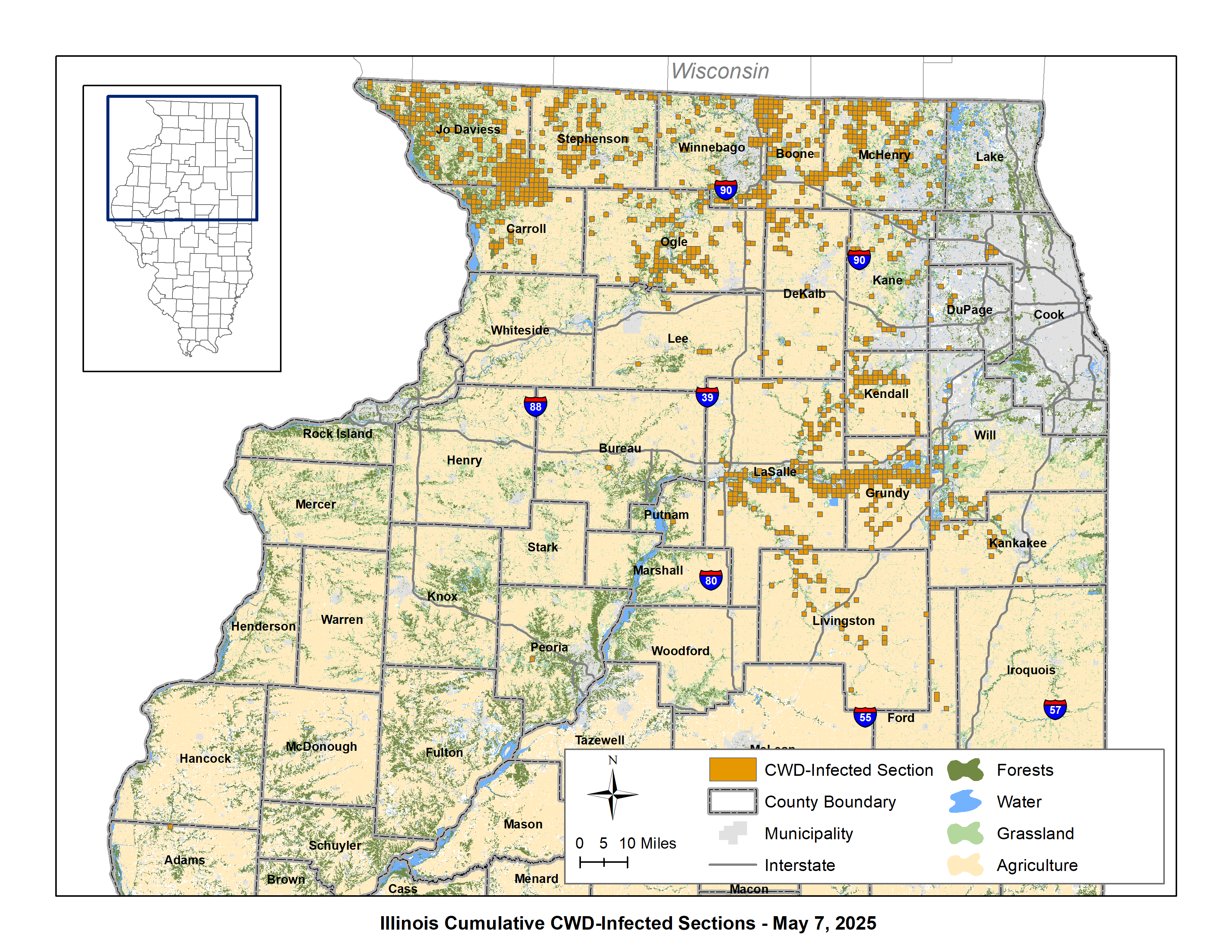
- Illinois Cumulative CWD-Infected Sections Map
- CWD Check Station Locations Map
- CWD Testing Locations By County – Where to Get Your Deer Tested
- CWD Testing Locations Interactive Map
- Check your Chronic Wasting Disease Test Results
- Request a mail-in CWD testing kit
- Chronic Wasting Disease Information Query System
- Report Sick or Dead Deer
- Firearm Deer Hunting Regulations for CWD Counties
- Administrative Rule 17-625 Special White-Tailed Deer Season for Disease Control
- Illinois Department of Agriculture’s CWD Webpage
SATURDAY, SEPTEMBER 27, 2025
Illinois IDNR Report 539 CWD positive deer in 25 counties Between July 1, 2024, and June 30, 2025
https://chronic-wasting-disease.blogspot.com/2025/09/illinois-idnr-report-539-cwd-positive.html
FRIDAY, APRIL 11, 2025
Illinois CWD TSE Prion Update, detected in Putnam, Marshall, Adams, and Peoria counties
https://chronic-wasting-disease.blogspot.com/2025/04/illinois-cwd-tse-prion-update-detected.html
WEDNESDAY, DECEMBER 14, 2022
Illinois CWD Conflicting Report of Total Cases, 1,165 Total Cases vs 1,383 Total Cases, To Date, take your pick?
https://chronic-wasting-disease.blogspot.com/2022/12/illinois-cwd-conflicting-report-of.html
FRIDAY, NOVEMBER 26, 2021
Illinois Chronic Wasting Disease (CWD): 2020-2021 Surveillance and Management Report (Project Period: July 1, 2020 - June 30, 2021) 1,165 cases confirmed to date
https://chronic-wasting-disease.blogspot.com/2021/11/illinois-chronic-wasting-disease-cwd.html
SUNDAY, DECEMBER 22, 2019
Illinois CWD TSE Prion 90 CWD-positive deer with 826 confirmed positive Total positives through June 30, 2019
https://chronic-wasting-disease.blogspot.com/2019/12/illinois-cwd-tse-prion-90-cwd-positive.html
FRIDAY, NOVEMBER 16, 2018
Illinois CWD in FY2018 Fifty-one CWD-positive deer were identified from 8,665 usable WT deer samples collected statewide
https://chronic-wasting-disease.blogspot.com/2018/11/illinois-cwd-in-fy2018-fifty-one-cwd.html
THURSDAY, APRIL 12, 2018
Illinois Legislation and SB-2493 set to help spread chronic wasting disease cwd tse prion, please vote NO!
https://chronic-wasting-disease.blogspot.com/2018/04/illinois-legislation-and-sb-2493-set-to.html
WEDNESDAY, JANUARY 24, 2018
Illinois Chronic Wasting Disease CWD TSE Prion cases mounting with 75 confirmed 2017 and 685 total to date
http://chronic-wasting-disease.blogspot.com/2018/01/illinois-chronic-wasting-disease-cwd.html
WEDNESDAY, SEPTEMBER 21, 2016
ILLINOIS -- Deer disease CWD meetings set Oct. 18 at the Nash Recreation Center in Oregon, Illinois, and Oct. 19 at the Big Rock Park District Community Building in Big Rock
http://chronic-wasting-disease.blogspot.com/2016/09/illinois-deer-disease-cwd-meetings-set.html
TUESDAY, FEBRUARY 02, 2016
Illinois six out of 19 deer samples tested positive for CWD in the Oswego zone of Kendall County
http://chronic-wasting-disease.blogspot.com/2016/02/illinois-six-out-of-19-deer-samples.html
Monday, August 31, 2015
Illinois Loosing Ground to Chronic Wasting Disease CWD cases mounting with 71 confirmed in 2015 and 538 confirmed cases to date
http://chronic-wasting-disease.blogspot.com/2015/08/illinois-loosing-ground-to-chronic.html
Saturday, February 08, 2014
Illinois CWD confirmed in Will County deer
http://chronic-wasting-disease.blogspot.com/2014/02/illinois-cwd-confirmed-in-will-county.html
Illinois CWD-Infected Sections - August 15, 2013
http://www.dnr.illinois.gov/programs/CWD/Documents/CWDMap.pdf
http://chronic-wasting-disease.blogspot.com/2014/02/illinois-cwd-confirmed-in-will-county.html
Monday, April 08, 2013
Evaluation of a wild white-tailed deer population management program for controlling chronic wasting disease in Illinois, 2003–2008
http://chronic-wasting-disease.blogspot.com/2013/04/evaluation-of-wild-white-tailed-deer.html
Wednesday, January 16, 2013
Illinois DuPage county deer found with Chronic Wasting Disease CWD
http://chronic-wasting-disease.blogspot.com/2013/01/illinois-dupage-county-deer-found-with.html
Tuesday, November 13, 2012
ILLINOIS CWD UPDATE NOVEMBER 2012
http://chronic-wasting-disease.blogspot.com/2012/11/illinois-cwd-update-november-2012.html
Thursday, February 10, 2011
CWD ILLINOIS UPDATE FEBRUARY 2011 Locations of CWD-Positive Deer - Updated 2/07/2011
http://chronic-wasting-disease.blogspot.com/2011/02/cwd-illinois-update-february-2011.html
Thursday, January 28, 2010
CWD ILLINOIS UPDATE 2010
http://chronic-wasting-disease.blogspot.com/2010/01/cwd-illinois-update-2010.html
Saturday, March 08, 2008
CWD UPDATE ILLINOIS Stephenson County joins CWD list
http://chronic-wasting-disease.blogspot.com/2008/03/cwd-update-illinois-stephenson-county.html
Illinois IDNR Report 539 CWD positive deer in 25 counties Between July 1, 2024, and June 30, 2025
https://chronic-wasting-disease.blogspot.com/2025/09/illinois-idnr-report-539-cwd-positive.html
FRIDAY, APRIL 11, 2025
Illinois CWD TSE Prion Update, detected in Putnam, Marshall, Adams, and Peoria counties
https://chronic-wasting-disease.blogspot.com/2025/04/illinois-cwd-tse-prion-update-detected.html
WEDNESDAY, DECEMBER 14, 2022
Illinois CWD Conflicting Report of Total Cases, 1,165 Total Cases vs 1,383 Total Cases, To Date, take your pick?
https://chronic-wasting-disease.blogspot.com/2022/12/illinois-cwd-conflicting-report-of.html
FRIDAY, NOVEMBER 26, 2021
Illinois Chronic Wasting Disease (CWD): 2020-2021 Surveillance and Management Report (Project Period: July 1, 2020 - June 30, 2021) 1,165 cases confirmed to date
https://chronic-wasting-disease.blogspot.com/2021/11/illinois-chronic-wasting-disease-cwd.html
SUNDAY, DECEMBER 22, 2019
Illinois CWD TSE Prion 90 CWD-positive deer with 826 confirmed positive Total positives through June 30, 2019
https://chronic-wasting-disease.blogspot.com/2019/12/illinois-cwd-tse-prion-90-cwd-positive.html
FRIDAY, NOVEMBER 16, 2018
Illinois CWD in FY2018 Fifty-one CWD-positive deer were identified from 8,665 usable WT deer samples collected statewide
https://chronic-wasting-disease.blogspot.com/2018/11/illinois-cwd-in-fy2018-fifty-one-cwd.html
THURSDAY, APRIL 12, 2018
Illinois Legislation and SB-2493 set to help spread chronic wasting disease cwd tse prion, please vote NO!
https://chronic-wasting-disease.blogspot.com/2018/04/illinois-legislation-and-sb-2493-set-to.html
WEDNESDAY, JANUARY 24, 2018
Illinois Chronic Wasting Disease CWD TSE Prion cases mounting with 75 confirmed 2017 and 685 total to date
http://chronic-wasting-disease.blogspot.com/2018/01/illinois-chronic-wasting-disease-cwd.html
WEDNESDAY, SEPTEMBER 21, 2016
ILLINOIS -- Deer disease CWD meetings set Oct. 18 at the Nash Recreation Center in Oregon, Illinois, and Oct. 19 at the Big Rock Park District Community Building in Big Rock
http://chronic-wasting-disease.blogspot.com/2016/09/illinois-deer-disease-cwd-meetings-set.html
TUESDAY, FEBRUARY 02, 2016
Illinois six out of 19 deer samples tested positive for CWD in the Oswego zone of Kendall County
http://chronic-wasting-disease.blogspot.com/2016/02/illinois-six-out-of-19-deer-samples.html
Monday, August 31, 2015
Illinois Loosing Ground to Chronic Wasting Disease CWD cases mounting with 71 confirmed in 2015 and 538 confirmed cases to date
http://chronic-wasting-disease.blogspot.com/2015/08/illinois-loosing-ground-to-chronic.html
Saturday, February 08, 2014
Illinois CWD confirmed in Will County deer
http://chronic-wasting-disease.blogspot.com/2014/02/illinois-cwd-confirmed-in-will-county.html
Illinois CWD-Infected Sections - August 15, 2013
http://www.dnr.illinois.gov/programs/CWD/Documents/CWDMap.pdf
http://chronic-wasting-disease.blogspot.com/2014/02/illinois-cwd-confirmed-in-will-county.html
Monday, April 08, 2013
Evaluation of a wild white-tailed deer population management program for controlling chronic wasting disease in Illinois, 2003–2008
http://chronic-wasting-disease.blogspot.com/2013/04/evaluation-of-wild-white-tailed-deer.html
Wednesday, January 16, 2013
Illinois DuPage county deer found with Chronic Wasting Disease CWD
http://chronic-wasting-disease.blogspot.com/2013/01/illinois-dupage-county-deer-found-with.html
Tuesday, November 13, 2012
ILLINOIS CWD UPDATE NOVEMBER 2012
http://chronic-wasting-disease.blogspot.com/2012/11/illinois-cwd-update-november-2012.html
Thursday, February 10, 2011
CWD ILLINOIS UPDATE FEBRUARY 2011 Locations of CWD-Positive Deer - Updated 2/07/2011
http://chronic-wasting-disease.blogspot.com/2011/02/cwd-illinois-update-february-2011.html
Thursday, January 28, 2010
CWD ILLINOIS UPDATE 2010
http://chronic-wasting-disease.blogspot.com/2010/01/cwd-illinois-update-2010.html
Saturday, March 08, 2008
CWD UPDATE ILLINOIS Stephenson County joins CWD list
http://chronic-wasting-disease.blogspot.com/2008/03/cwd-update-illinois-stephenson-county.html
Subject: CWD--ILLINOIS--THREE MORE POSITIVE CWD CASES FOUND !
Date: Mon, 16 Dec 2002 14:42:34 -0600
From: "Terry S. Singeltary Sr." <flounder@wt.net>
Reply-To: Bovine Spongiform Encephalopathy <BSE-L@uni-karlsruhe.de>
To: BSE-L@uni-karlsruhe.de
######## Bovine Spongiform Encephalopathy <BSE-L@UNI-KARLSRUHE.DE> #########
Illinois Department of Natural Resources
FOR IMMEDIATE RELEASE
December 16, 2002
THREE MORE POSITIVE CWD CASES FOUND IN ILLINOIS
SPRINGFIELD, ILL. Chronic wasting disease (CWD) has been
detected in three more deer in northern Illinois, the Department of
Natural Resources announced today, bringing to four the number of
confirmed cases of the disease in Illinois. CWD is not known to be
contagious to livestock or humans.
Two of the three new cases were found in the vicinity of
the first CWD case reported in early November. One positive case each
was returned from Boone, McHenry and Winnebago counties. This represents
the second instance of a CWD-positive deer in Boone County.
(Illinois'first case, originally reported as from Winnebago County,
actually was just over the county line in Boone County). The locations
of the three cases reported to date within Boone and Winnebago counties
are within approximately two miles of each other in an area east of
Roscoe, Illinois. The McHenry County positive deer came from an area a
few miles northeast of Woodstock. The new cases include a 2.5-year-old
buck (Boone), 1.5 year-old-buck (McHenry) and a 1.5-year-old doe
(Winnebago).
The samples were taken as part of IDNR's CWD surveillance
of deer harvested during the firearm deer season. Testing was conducted
at the Illinois Department of Agriculture Disease Laboratories. A
follow-up test on the McHenry County case was conducted at the National
Veterinary Services Laboratory in Ames, Iowa, confirming the diagnosis.
Follow-up tests on the Boone and Winnebago county animals were deemed
unnecessary, given their location and the contagious nature of the disease.
"It comes as no surprise that we found additional cases
near the first one," said IDNR Director Brent Manning. "The
identification of a new location in McHenry County, although an
unwelcome result, does demonstrate that our surveillance program is
proving effective. We will continue to study results as they come in, in
order to incorporate the best science into our response strategies."
Illinois expanded its surveillance efforts regarding CWD
earlier this year and created a joint task force with the Departments of
Natural Resources and Agriculture following the CWD outbreak in southern
Wisconsin. About 4,000 samples of hunter-harvested deer were taken in 36
counties around Illinois during the firearm deer season Nov. 22-24 and
Dec.5-8. Tests have been completed on about 1,450 samples, with only the
three positive results.
"We continue to be committed to a long-term plan of stepped
up surveillance and monitoring and taking all steps biologically
appropriate to combat chronic wasting disease in Illinois. Deer hunters
and those who value the health of wildlife and outdoor recreation in
Illinois played an important role during the firearm season and will
continue to play an important role in that process."
Counties sampled for CWD during the 2002 firearm deer
hunting season included: Jo Daviess, Stephenson, Winnebago, Boone,
McHenry, Carroll, Ogle, DeKalb, Whiteside, Rock Island, Bureau, LaSalle,
Hancock, Adams, Pike, Fulton, McLean, Vermilion, Sangamon, Macoupin,
Shelby, Fayette, Effingham, Clark, Lawrence, Madison, St. Clair,
Clinton, Washington, Randolph, Jefferson, Marion, Williamson, Union,
Johnson and Pope. Counties were selected based on a variety of factors
including geographic location, size of deer population and the number of
facilities with captive deer or elk.
Chronic wasting disease is a fatal neurological disease
found in deer and elk. The disease affects the brains of infected
animals, causing them to become emaciated, display abnormal behavior,
lose coordination and eventually die. It is not known to be contagious
to livestock or humans.
CWD has been diagnosed in wild, free-ranging deer and elk
as well as in captive animals in a number of western states but earlier
this year was found in neighboring Wisconsin and Minnesota.
For updated information about chronic wasting disease,
including answers to frequently asked questions and the Departments
rules, please see our web site at:
A web application that allows participating hunters to check the status of test results for
deer sampled during the firearm deer season should be available this week.
###
TSS
########### http://mailhost.rz.uni-karlsruhe.de/warc/bse-l.html ############
TSS
posted by Terry S. Singeltary Sr. at
5:56 PM




0 Comments:
Post a Comment
Subscribe to Post Comments [Atom]
<< Home